

Suppose you've ever worked in a professional kitchen. In that case, you already know that GN containers (Gastronorm containers) are everywhere—from buffet lines and salad bars to bakery kitchens and food prep stations. But one question often puzzles kitchen managers and chefs alike: Should I choose stainless steel or plastic GN containers?
Both have their strengths, and choosing the right one can make a big difference in efficiency, food safety, and durability. Let's dive deeper into how each material performs in real-world conditions and when to choose one over the other.
1. Durability and Longevity
Stainless steel GN containers are the champions of strength. Made from high-quality stainless steel, usually between 0.6–0.8 mm thick, these pans are resistant to dents, bending, and cracking. They can handle heavy-duty use in busy kitchens, withstand high temperatures, and maintain their shape even after years of service.
Most professional kitchens prefer stainless steel GN pans for cooking, roasting, or steaming because they can go directly from oven to buffet line without warping. The reinforced edges and anti-jamming design make stacking and storage more efficient, saving time during service rushes.
On the other hand, plastic GN pans, typically made from durable polypropylene (PP), are designed for lightweight handling and flexibility. While they won't rust or corrode, they're not quite as resistant to physical impacts as steel. However, modern PP materials are remarkably tough—many Heavybao plastic GN containers are described as “unbreakable” under normal kitchen conditions.

2. Temperature Resistance and Application
Temperature is one of the biggest deciding factors when choosing between stainless steel and plastic GN containers.
Stainless Steel GN Containers can handle extreme heat. They're perfect for cooking, baking, roasting, or holding hot dishes in warming stations. Because stainless steel distributes heat evenly, it also helps maintain food temperature during service.
Plastic GN Containers, by contrast, are designed for versatility in cold and moderate heat environments. They typically perform well from -40°C to +99°C, making them excellent for storing cold salads, desserts, or prepped ingredients in chillers and freezers.
If your operation involves moving food from freezer to oven, stainless steel is the safer choice. But if you focus on food storage, refrigeration, or buffet presentation, plastic GN pans are lightweight and cost-effective.
3. Hygiene and Food Safety
When it comes to food safety, both materials perform well when manufactured according to LFGB standards, which ensure they are safe for food contact. Heavybao stainless steel GN containers, for instance, meet LFGB requirements and feature electrolysis polishing, resulting in a smooth, mirror-like surface that resists bacteria buildup and makes cleaning effortless.
Plastic GN containers are also food-safe and easy to clean, but they can sometimes absorb odors or stains over long-term use—especially if used for spicy or oily foods. That's why many kitchens assign color-coded plastic pans for specific uses to prevent cross-contamination.
4. Weight and Handling
If you value lightweight handling, plastic GN pans clearly win. They're easy to carry, even when filled, which is helpful for catering operations or buffet setups that require frequent refills. Their stackable design also makes transport and storage convenient.
Stainless steel pans are heavier, but that weight comes with a feeling of sturdiness and reliability. In professional catering or hotel kitchens where performance and presentation matter, the sleek metallic shine of a stainless steel GN pan often adds a professional touch to the buffet line.
5. Cost and Long-Term Value
Budget is another important consideration. Plastic GN containers are generally more affordable upfront, making them ideal for high-volume food storage. However, they may need replacement over time, especially if exposed to frequent temperature changes or heavy impact.
Stainless steel containers cost more initially but offer superior longevity and heat resistance, meaning fewer replacements in the long run. Many chefs see them as an investment—especially when purchasing from reputable brands like Heavybao, which offers a full range of GN containers, food pans, and kitchen storage solutions designed for both EU and US standards.
6. Aesthetics and Presentation
Presentation plays a major role in buffets, open kitchens, and catering displays. Stainless steel GN pans, with their polished, reflective surfaces, enhance the visual appeal of hot food displays and carving stations. They look professional and are often preferred in high-end or hotel settings.
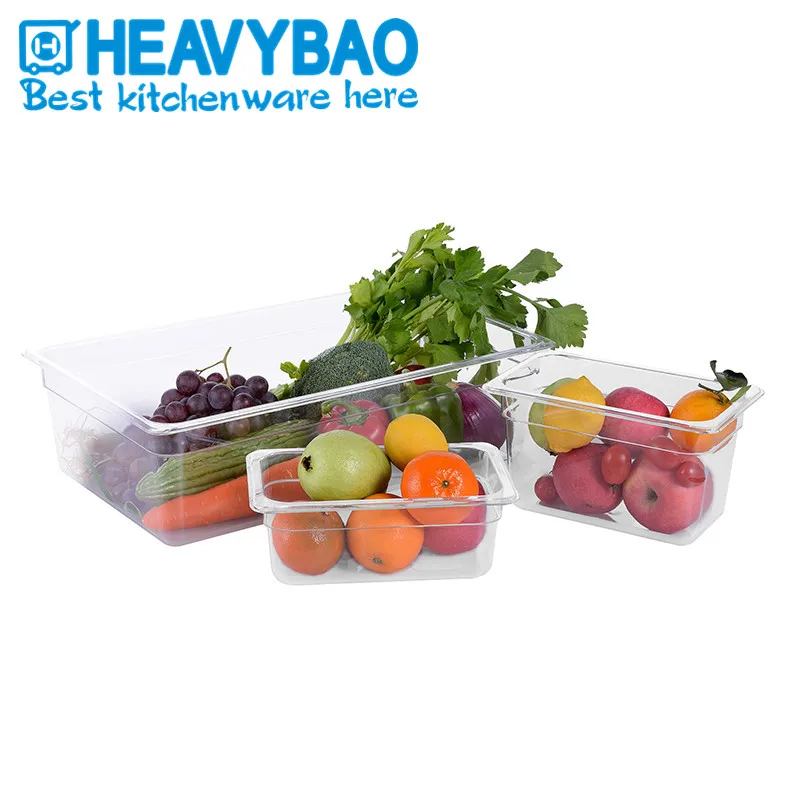
Plastic GN containers, especially clear ones, are ideal for displaying salads, fruits, and cold desserts. The transparency allows guests to see what's inside without opening the lid, which is both hygienic and convenient.
When to Choose Which?
| Use Case | Best Choice | Reason |
| Cooking or baking | Stainless Steel | Withstands high heat and resists deformation |
| Hot buffet or chafing dishes | Stainless Steel | Maintains temperature and looks elegant |
| Cold storage or salad bar | Plastic GN Pan | Lightweight, clear, and suitable for refrigeration |
| Transporting prepared food | Plastic GN Pan | Easy to carry, less weight |
| Long-term kitchen investment | Stainless Steel | More durable, long-lasting |
| Limited budget or temporary use | Plastic GN Pan | Cost-effective and practical |
Conclusion: Choosing Heavybao for Professional Kitchen Solutions
Whether you're running a hotel kitchen, catering service, or a small restaurant, choosing between stainless steel and plastic GN containers depends on your daily operations.
If durability, heat resistance, and longevity matter most, Heavybao Stainless Steel GN Containers are your go-to solution. For lightweight, versatile, and affordable cold food storage, Heavybao Plastic GN Pans are a perfect fit.
Heavybao, as a trusted commercial kitchenware manufacturer, provides both stainless steel and plastic GN containers that meet international standards (EU, US, Japan) and food safety certifications like LFGB. With customized logos, stackable designs, and precise craftsmanship, Heavybao helps chefs and kitchen operators create efficient, safe, and visually appealing food service setups.


